





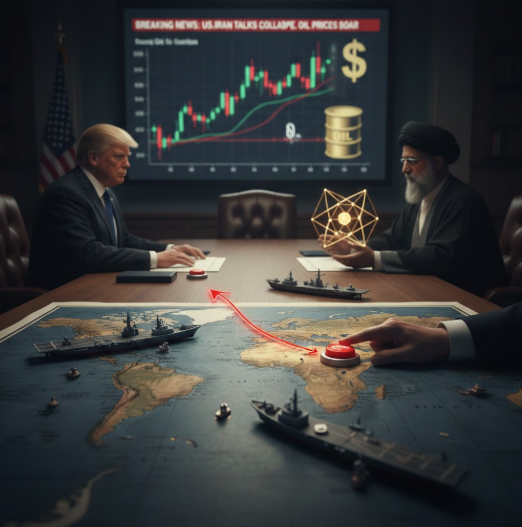
The third round of mediated talks in Geneva between the United States and Iran concluded this February 2026 without a breakthrough. While Omani mediators and Iranian Foreign Minister Abbas Araghchi claimed significant progress and intense engagement, Washington remains deeply dissatisfied.
President Trump has explicitly stated he is not happy with Tehran’s refusal to meet core demands, specifically a total halt to uranium enrichment and the dismantling of key nuclear facilities at Fordow and Natanz. This diplomatic deadlock mirrors a long history of friction, including the 2015 Joint Comprehensive Plan of Action – JCPOA – under the Obama administration, which saw Iran receive billions in unfrozen assets – a plane full of US$ 150 billion in cash – but eventually face accusations of enrichment breaches.
After withdrawing from that deal in 2018 and navigating the stalled efforts of the Biden years, the Trump administration has returned to a policy of maximum pressure. With American aircraft carriers massed in the region and non-essential diplomatic staff departing Israel, the threat of military action has reached a fever pitch. President Trump has teased a potential strike as the biggest scoop in history, warning that the window for diplomacy is closing rapidly.
The economic consequences of such a military escalation would be immediate and severe. Oil markets have already begun pricing in a war risk premium, with Brent crude climbing toward 73 dollars per barrel as of late February. A direct strike on Iranian infrastructure would likely trigger a sharp spike toward 90 or 100 dollars within days. The primary concern for global markets is the Strait of Hormuz, a chokepoint through which 20 percent of the world’s oil flows.

Any Iranian attempt to block this waterway could send prices soaring toward 150 dollars, creating a massive supply shock that would hit China and other major Asian importers hardest. While the US currently maintains high strategic reserves and record domestic production, the resulting energy spike would inevitably filter through to American consumers at the pump. This creates a significant dilemma for the Federal Reserve; while the US economy has seen cooling inflation in early 2026, a new energy crisis would likely reignite price pressures, potentially forcing the Fed to delay anticipated interest rate cuts or even consider further hikes to stabilize the dollar.

Looking ahead to the coming weeks, the most realistic prediction is that the current diplomatic cycle will collapse following the scheduled technical talks in Vienna. Faced with an Iranian regime that refuses to surrender its enrichment program and a US administration that has exhausted its patience, the United States is likely to launch a series of targeted, surgical strikes against Iranian nuclear and ballistic missile sites before the spring. These strikes will be designed to set back Iran’s nuclear breakout timeline by several years without devolving into a full-scale ground invasion.
In response, Iran will likely engage in asymmetric retaliation through regional proxies and maritime harassment in the Persian Gulf, leading to a period of heightened global energy volatility and a significant reordering of Middle Eastern security alliances through the remainder of 2026. In short, we are in unchartered territory.
