




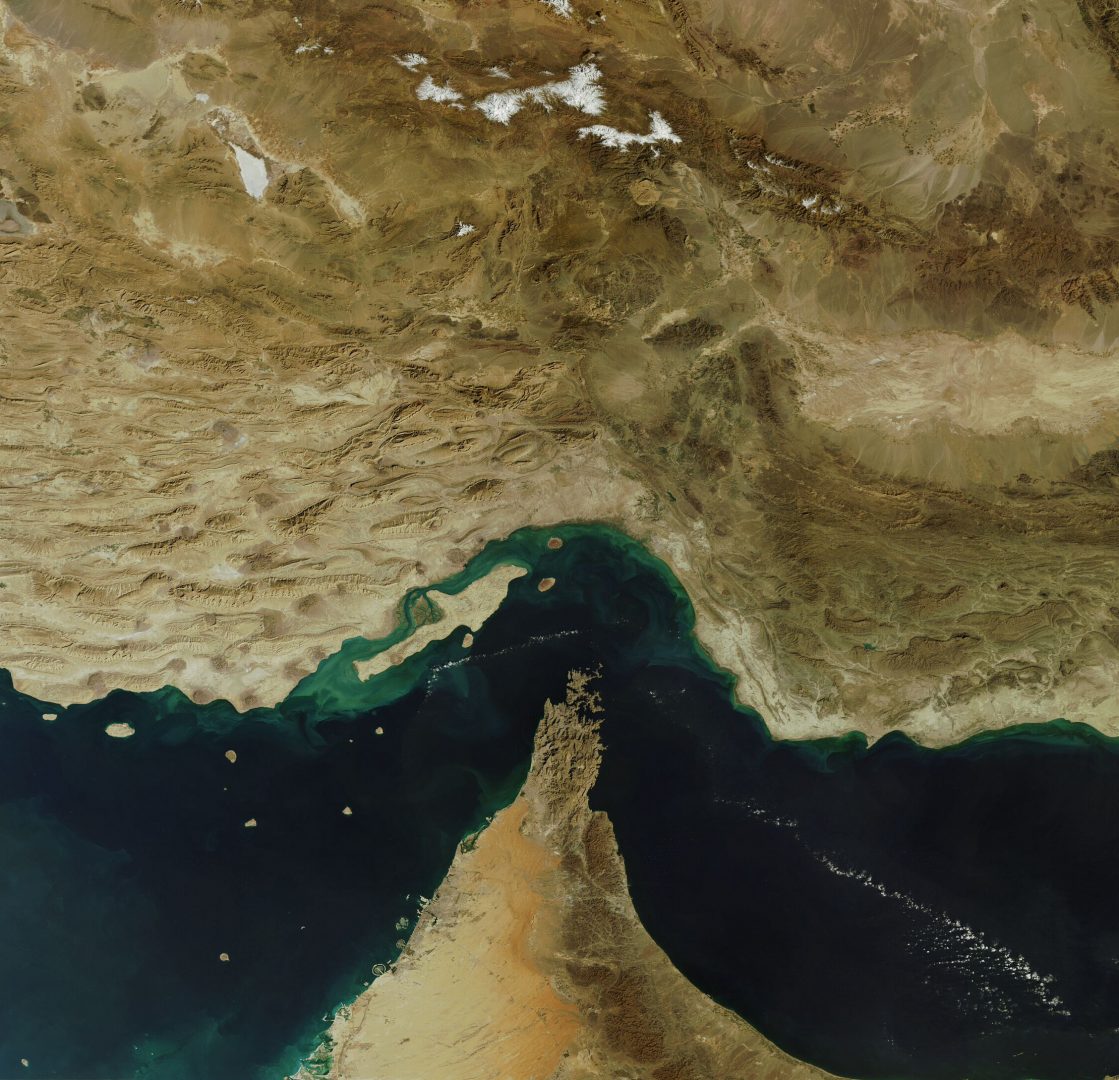
The escalation of conflict in the Middle East following US and Israeli strikes on Iran has placed global energy markets on edge, Wood Mackenzie, a global research and consulting firm,said, warning that oil and LNG prices are “heavily risked to the upside” if disruptions in the Strait of Hormuz persist.
In a special webinar about the Middle East conflict and implications for oil and LNG prices that was held on 2 March, Wood Mackenzie said the scale of supply at risk dwarfs previous geopolitical shocks. “There is on the order of 12 to 14 million barrels a day (mmbbl/d) of crude and condensate that are moving through the Strait of Hormuz,” said Alan Gelder, SVP Refining, Chemicals & Oil Markets. These shipments, according to Gelder, satisfy about 15% of global demand. But it’s not only crude and condensate because there are also exports of refined products, as the Middle East is an export refining center.
Gelder recalled that during the early stages of the Russia-Ukraine war, markets feared the loss of around 3 mmbbl/d of Russian exports, driving Brent from $80 to above $125 per barrel.
“The volumes associated were roughly half of what we’re talking about now,” Glender said, underscoring that the stakes this time are significantly higher.
Even in an optimistic scenario where negotiations progress quickly, analysts said it could take weeks for export flows to normalize. “How long the closure lasts is key to how the impacts ripple through the global economy,” Gelder stressed. Brent, which had closed below $73 per barrel before the weekend escalation, could “well move above $100” if flows are not swiftly restored.
Wood Mackenzie’s broader analysis suggests that a sustained blockage could drive prices into the $125–150 range, where demand destruction would begin to weigh materially on growth, while oil above $200 per barrel would approximate the economic shock of the 1970s oil embargo in today’s terms.
Alternative export routes offer only limited relief. Saudi Arabia can redirect some volumes through its East–West pipeline to the Red Sea via the UAE and Fujairah, while Iraq can move crude northward to Kurdistan and toward the Mediterranean. Yet these options cover only a fraction of the 15 mmbbl/d at risk.
“If the Strait of Hormuz is not closed for long, production in the GCC countries is not fundamentally affected, as they can rely on storage facilities,” explained Gelder. “The critical issue is the duration of any closure and the available diversion mechanisms. Inventories would draw down rapidly across multiple regions if the disruption persists,” he added.
While oil markets entered the crisis with expectations of modest oversupply, LNG markets were already tighter and have reacted more violently. Around 81 million tons (mmt) of liquefied natural gas (LNG) transited Hormuz in 2025, primarily from QatarEnergy, accounting for nearly 20% of global supply. “Each week that the Strait of Hormuz remains closed, about 1.5 million metric tons of LNG are taken out of the market,” said Massimo Di Odoardo, Vice President of Gas and LNG Research.
European gas prices, which were trading near $11 per million British thermal units (mmbtu) before the escalation, surged sharply as news emerged of precautionary shutdowns of Qatari LNG trains. “The gas and LNG market is structurally more volatile than oil,” Di Odoardo said. “There is no such thing as strategic reserves. There is no such thing as spare capacity. Whenever there’s a shock, the effect on prices is very, very strong.”
Europe’s storage levels are already below seasonal norms after a cold January, and a prolonged halt in LNG flows would force both Asian and European buyers to compete aggressively for available cargoes. “If you start to get beyond one month of the strait closure, Europe is really going to struggle to get anywhere near 75% of gas in storage,” Di Odoardo warned, adding that prices could approach $20 per mmbtu in that scenario. Additional pressure comes from precautionary closures of Israeli gas fields and the risk to Iranian pipeline exports to Türkiye, potentially pushing more buyers into the spot market.
The economic consequences could be severe if high prices persist. Wood Mackenzie’s Chief Economist Peter Martin warned that sustained oil at $150 per barrel could drag global GDP growth below 2%, effectively tipping the world into recession. “The last time we saw growth under 2%, outside of the financial crisis or the Covid pandemic, was back in 1993,” Martin noted, emphasizing that energy prices remain the primary contagion channel to the broader global economy.
For big international oil companies operating in the region, they could be affected by the war as 12% of their production is from countries whose exports move through the Strait of Hormuz. Despite this, they are not likely to pull out of the Middle East. As Fraser McKay, Head of Upstream Analysis explained in the webinar, the region remains “extremely important and strategic”.
McKay stressed that most of these companies entered the region fully aware of the single-point risk and will have contingency and crisis-management plans in place. In the immediate term, the focus is first on safeguarding personnel and then on protecting the sanctity of operations, particularly as some shutdowns have already occurred.
Ultimately, the conflict has revived uncomfortable reminders of the 1970s oil embargo. “The shock at the time was the pace and scale of the price increase,” Gelder said, noting that today’s global economy is less oil-intensive but still vulnerable to a sustained disruption of this magnitude. With the Middle East projected to increase its share of global oil supply in the coming decades, the crisis may also prompt importing nations to reassess energy security strategies.
For now, markets rely on one decisive variable, the length of the war or as Wood Mackenzie analysts put it “duration is critical.” If transit through Hormuz resumes within days or weeks, the shock may prove temporary. If not, oil and LNG prices could remain elevated during 2026, reshaping the outlook for global growth and energy policy alike.
According to Goldman Sachs report issued on March 1about implications of the Iran war on energy prices, if LNG flows are halted for one month through the strait, European and Asian gas prices are projected to rise to around €74 per megawatt-hour ($25 per mmbtu), roughly 130% above current levels, while the impact on US gas prices would likely remain limited.
On 28 February, US and Israeli forces struck Iranian government, military and nuclear targets, killing Supreme Leader Ali Khamenei and senior members of Iran’s defense leadership. Iran has retaliated with missile and drone attacks on Israel and US bases across the Gulf region.
