





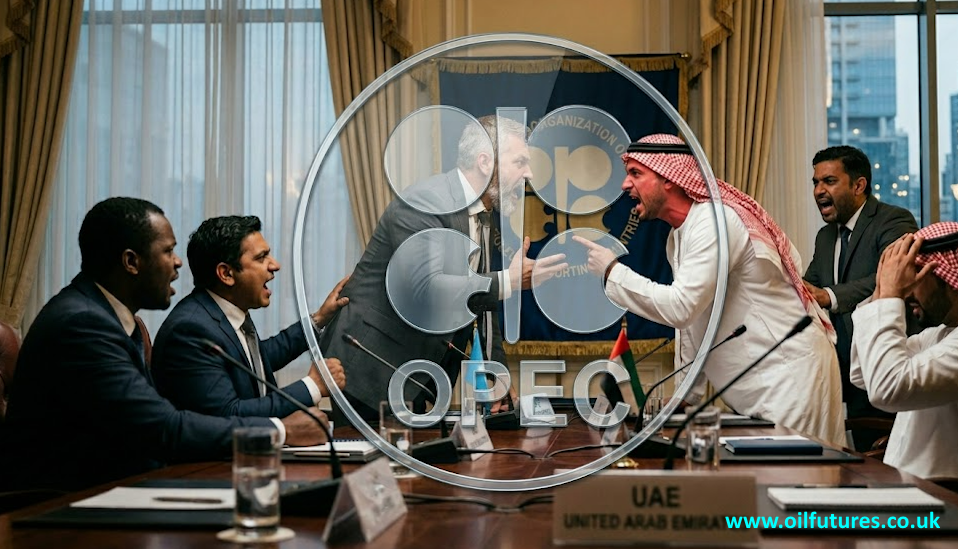

The Organization of the Petroleum Exporting Countries (OPEC), founded in 1960 by Iran, Iraq, Kuwait, Saudi Arabia, and Venezuela, faced a historic shift on Tuesday when the United Arab Emirates announced its departure from the cartel.
The UAE, one of the group’s most influential producers, had been a member for over 60 years, navigating the bloc’s tumultuous history. It is the fourth largest oil producers in the cartel.
By 2024, however, friction grew over the production quota system, which the UAE felt unfairly limited its output despite significant domestic investments in capacity. While Saudi Arabia, the group’s de facto leader, insisted on production cuts to stabilize global prices, the UAE grew increasingly frustrated as other member nations allegedly exceeded their agreed-upon limits.
 |
| Data Source: OPEC |
Geopolitical tensions exacerbated these economic disagreements. In 2026, relations between the UAE and Saudi Arabia soured over diverging interests in Yemen. When the UAE-backed Southern Transitional Council moved to assert control in the south, Saudi intervention forced a tactical retreat, creating a rift between the two longtime allies.
The decision to quit the cartel in May 2026 followed Iran’s categorical refusal to pay reparations for the conflict’s damages. For the UAE, remaining in an organization alongside Iran became politically untenable.
This departure signals a fundamental realignment of power in the Middle East and the global energy market. Without the UAE’s cooperation, OPEC’s ability to dictate global oil prices is significantly diminished, potentially leading to a period of high volatility.
For the UAE, the move represents a “national interests first” strategy, prioritizing economic recovery and the restoration of its status as a global trade hub over the collective bargaining power of a fractured oil bloc.
