





 |
| Iran-US MoU |
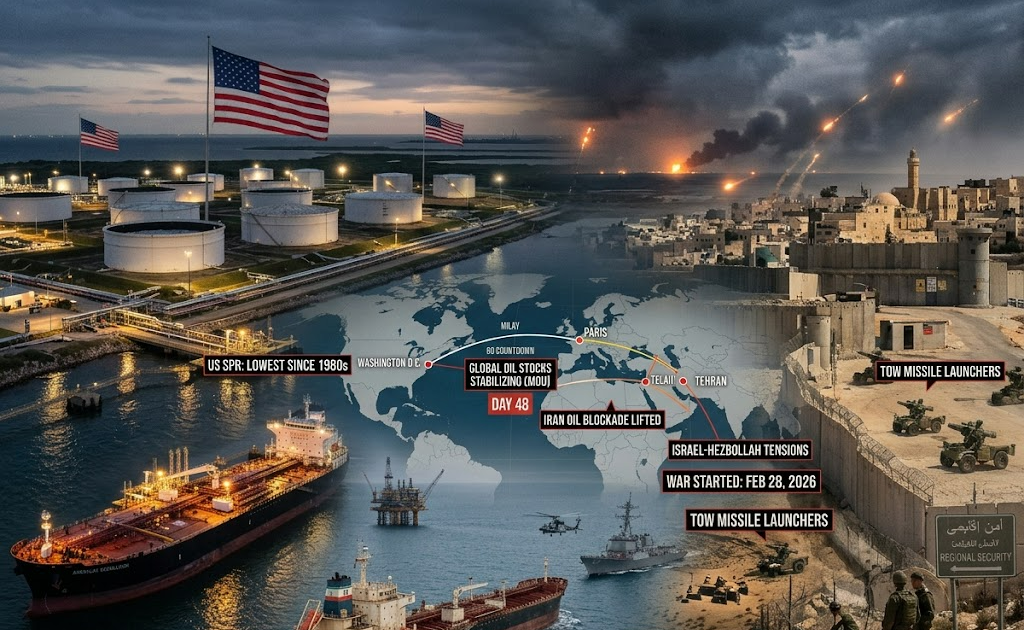
Vice President JD Vance recently confirmed what many political analysts already suspected: the U.S.-led Memorandum of Understanding with Iran is primarily a tactical tool designed to buy economic time and enhance strategic leverage over global crude oil markets. In a television interview, Vance explicitly stated that President Donald Trump directed the administration to use the MOU to refill the global oil economy and restock reserves before reassessing their geopolitical options.
 |
| U.S. Crude Oil Stocks including SPR |
Prior to the agreement, global petroleum stockpiles were dangerously depleted. The U.S. Strategic Petroleum Reserve had plummeted to its lowest levels since the late 1980s, driven down by the outbreak of the U.S.-Iran conflict earlier in the year.
This supply crunch sparked severe concern among international leaders. At the G7 summit in France, President Trump publicly acknowledged that French President Emmanuel Macron had repeatedly raised alarms over the severe economic challenges triggered by the war. The crisis peaked around June 17, when President Trump announced the MOU and warned that certain petroleum reserves could completely empty within four weeks.
While it was initially unclear if he meant domestic U.S. stocks or global inventories, the statement underscored the immense pressure on the Strategic Petroleum Reserve since hostilities began on February 28, 2026.

While the MOU has successfully halted the upward trajectory of oil prices, crude has not yet dropped low enough for the U.S. government to comfortably aggressive purchase open-market oil to replenish its depleted domestic reserves. This remains a primary point of anxiety for the Trump administration.
The price of WTI and Brent, meanwhile, stood at $ and $ in the energy markets, signalling a steady downward trend, despite the war rhetoric.

Despite the temporary truce, low-level tit-for-tat skirmishes continue between the two nations. However, a major escalation is highly unlikely to occur before the expiration of the MOU’s 60-day review window.
The economic realities on the ground reinforce this fragile stability. Iran recently admitted that the U.S. naval blockade successfully choked off its energy exports, preventing the Iranian government from selling a single barrel of oil. Despite Tehran’s aggressive rhetoric, the Iranian leadership is desperate to avoid a return to total economic isolation, which previously triggered severe domestic hardships and risked sparking widespread civil unrest.
Simultaneously, regional tensions remain acute as Israel threatens Iran with a devastating major military escalation, dubbed the Third War, unless Tehran reins in regional proxy forces like Hezbollah and halts its ballistic missile operations. Nevertheless, because the Trump administration maintains significant diplomatic and economic leverage over both its regional allies and adversaries, a full-scale regional war between Israel and Iran will likely be averted in the near term.
In conclusion, the MOU functions less as a permanent peace treaty and more as an economic relief valve. By temporarily depressing oil prices and opening a window to stabilize global energy markets, the Trump administration has bought itself critical breathing room.
However, until the U.S. successfully replenishes its Strategic Petroleum Reserve and a more permanent diplomatic framework is established, this stability remains highly artificial, leaving the global economy vulnerable to any sudden collapse in negotiations once the 60-day window expires.
