






The United States and Iran are back at war. The Memorandum of Understanding that President Trump once described as a test of the Islamic Republic’s commitment to peace is now in tatters. In the long run, this collapse could severely backfire on Vice President JD Vance, the chief architect of the deal, who aims to run for the presidency in just two years.
To his credit, Mr. Vance, alongside the Pakistani Prime Minister and Pakistan’s Chief of Defence Staff, tried his best to resolve the issues amicably. Judging by how negotiations evolved, two distinct camps within the Iranian establishment stymied the process: hardliners who rejected any engagement with the United States, and moderates, routinely overshadowed by their hardline counterparts, who could only push so far before hitting a dead end.
While the deal is practically dead, President Trump claims he is still in talks, though the ceasefire has officially ended. He has ordered airstrikes on strategic sites along Iran’s southwestern coast, which overlooks the critical Strait of Hormuz waterway. Even during the ceasefire, the Islamic Revolutionary Guard Corps repeatedly fired upon vessels, prompting the United States to respond in kind. These U.S. responses were strictly limited to the coastline facing the Strait of Hormuz—likely an effort to prevent uncontrolled escalation in the hope of preserving peace—but this restraint ultimately proved futile.
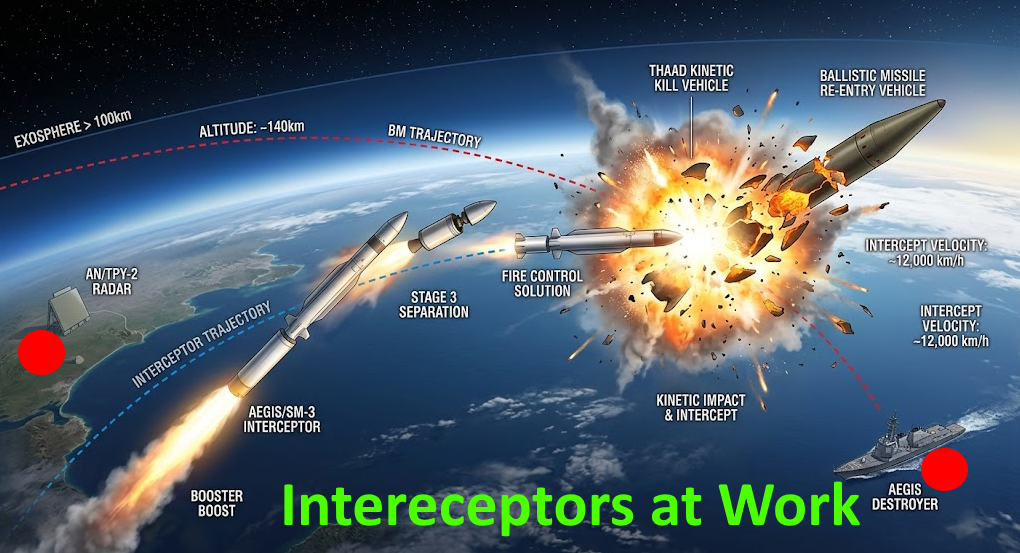
United States fighter jets have bombed Iranian targets for three consecutive nights. In response, Iran has launched ballistic missiles and drones at Bahrain, Kuwait, Qatar, Oman, and Jordan, almost all of which were intercepted by U.S.-supplied air defense systems.
However, these American-made interceptor missiles are prohibitively expensive and in short supply, even as wartime demand surges. With a single interceptor costing anywhere from $3 million to $27 million, supply constraints could severely limit a prolonged military campaign. This high cost likely explains why President Trump is reluctant to engage in a protracted, expensive conflict, though finding a swift resolution remains difficult.

On Monday, President Trump announced he would reimpose a naval blockade on all ships traveling to and from Iranian ports. Crucially, he intends to levy a 20 percent fee on commercial vessels to offset the cost of the U.S. military’s blockade operations. Shipping companies will undoubtedly pass this expense onto consumers. Consequently, oil prices—which have already spiked by more than 10 percent since hostilities resumed—are expected to surge further in the coming weeks. President Trump defended the surcharge, arguing that wealthy Arab nations in the region can easily afford to pay for the security service.
Meanwhile, the fragile truce between Saudi Arabia and Yemen’s Houthis has shattered. When an Iranian aircraft carrying a Houthi delegation attempted to land at Sanaa International Airport in Houthi-controlled territory, Saudi fighter jets bombed the runways. Although the plane managed to divert and land safely elsewhere, the enraged Houthis retaliated by firing six ballistic missiles at Saudi Arabia, all of which were intercepted.
President Trump indicated yesterday that airstrikes against Iran would continue through Tuesday, though he declined to detail his next strategic steps. He plans to address the nation on Thursday night. Ultimately, the situation in the Middle East remains highly volatile and unpredictable, and its destabilizing impact on global energy markets is now a foregone conclusion.
