





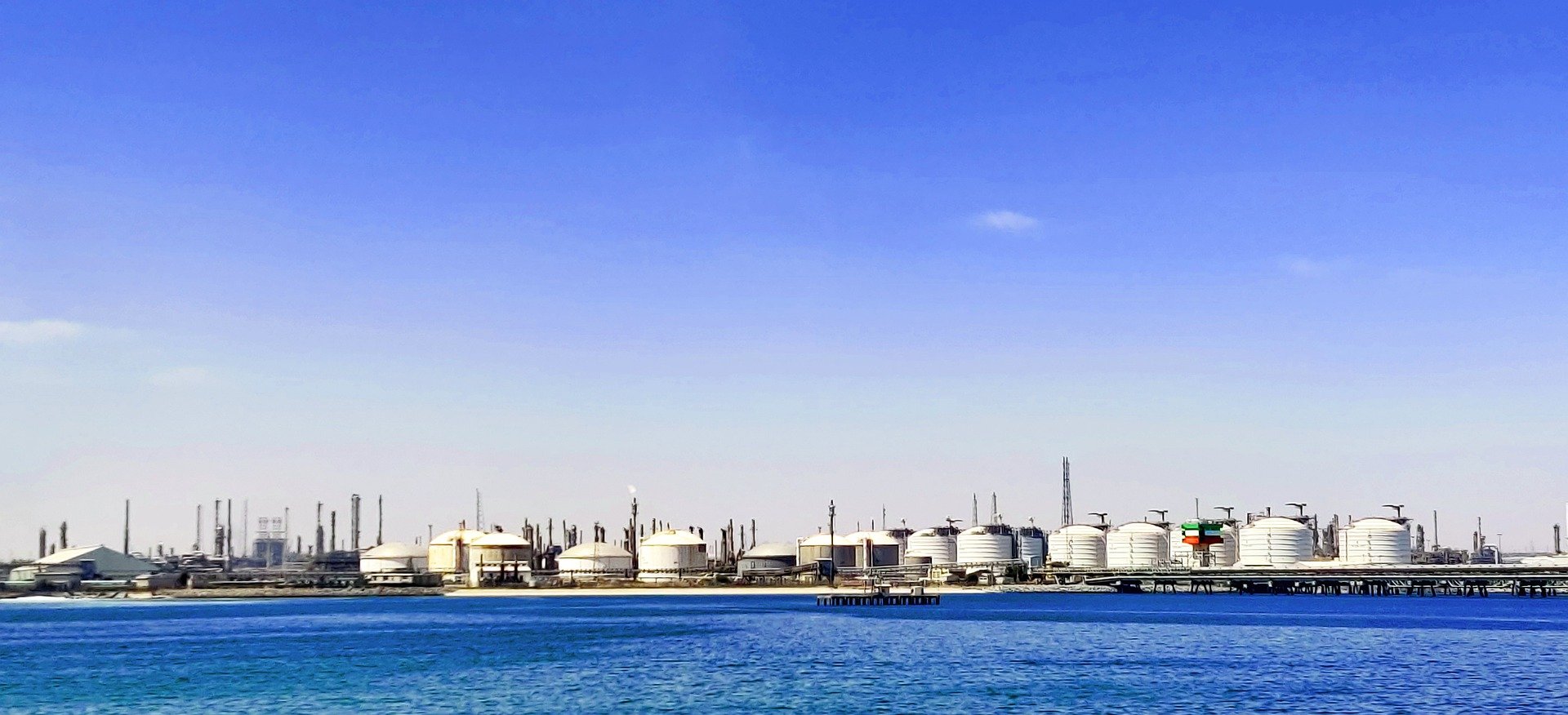
The project represents the second phase of Oman Tank Terminal Company’s Ras Markaz oil storage terminal at Duqm, on the sultanate’s Arabian Sea coast


Contractors have submitted prequalification documents to state-owned Oman Tank Terminal Company (OTTCO) for a major project related to the expansion of the Ras Markaz crude oil storage complex at Duqm, on the sultanate’s Arabian Sea coast.
The project involves the engineering, procurement and construction (EPC) of eight large storage tanks, each with a capacity of 650,000 barrels. This will increase the Ras Markaz terminal’s total storage capacity by 5.2 million barrels.
OTTCO issued the prequalification notice on 28 July, with contractors submitting responses by 4 August, according to sources.
The project represents the second phase of the Ras Markaz oil storage terminal within the Special Economic Zone at Duqm (Sezad).
OTTCO commissioned the first phase of the Ras Markaz crude oil storage park – which covers 10 square kilometres and has a capacity of 26.7 million barrels – in December 2022.
The storage facility has two parts. The first is a marine services area, which includes a floating station for crude import and export. This zone is about 7 kilometres (km) offshore and is connected via two 42-inch pipelines and associated facilities.
The floating station, with a depth of up to 42 metres, can accommodate very large crude carriers (VLCCs). It is linked to four main pumps that transfer crude oil to the storage area, which is located more than 120 metres above sea level. OTTCO could add pumps at a later stage to keep pace with future demand for oil storage.
The second part of the storage facility features oil pumping systems, water treatment facilities, reservoirs, power station networks and other associated systems.
Region’s largest oil storage park
The Ras Markaz oil storage facility will be built in five phases over several years, across an area measuring about 40 square kilometres, for which OTTCO signed a land agreement with Sezad in July 2017.
It will be able to hold 200 million barrels of crude a year. The total investment commitment for the scheme is understood to be $5.2bn.
The storage terminal at the first phase of the Ras Markaz facility is connected to the estimated $7bn Duqm refinery and other oil derivative production plants at Sezad via a pipeline that will supply crude feedstock, when required, to the refinery.
In 2017, Sezad awarded Netherlands-based dredging and maritime services specialist Royal Boskalis Westminster a $510m contract to construct the bulk liquid terminal at the Port of Duqm.
The contract called for, among other things, the construction of a 980-metre quay wall, deepening the port basin to 18 metres and the approach channel to 19 metres, dredging and reclamation works and the establishment of a new double berth jetty island.
In conjunction with the liquid berth project, about 79 hectares of terminal capacity was developed adjacent to the 4.6km-long secondary breakwater.
ALSO READ: Omani storage tank operator prepares crude pipeline tender
Following increased investor interest in Duqm – due to the refining and petrochemicals industrial potential it offers – a further 55 hectares was reclaimed from the sea to create new terminal capacity for existing and future companies looking to invest in Sezad.
Following the completion of the marine infrastructure works at the liquid terminal, a consortium of Italy’s Saipem and US-based Chicago Bridge & Iron commenced work on a crude tank farm, product export terminal and other facilities. The group was awarded the contract for the Duqm refinery project’s EPC package three in February 2018.
As a result, storage capacity at the bulk liquid terminal will increase to cater for a variety of refined products from the Duqm refinery. In addition, the pipeline network running from the refinery to the berth will facilitate direct shiploading, particularly of liquefied petroleum gas and high-sulphur fuel oil.
Dry bulk products, such as petroleum coke and elemental sulphur from Duqm refinery, will be transported by truck to the liquid bulk terminal and stored in warehouses pending export.
 READ THE AUGUST 2026 MEED BUSINESS REVIEW – click here to view PDF
Saudi Arabia builds for the global stage; Rising uncertainty creates fresh set of challenges in the Maghreb; Gulf banks remain robust in the face of geopolitical tensions.
Distributed to senior decision-makers in the region and around the world, the August 2026 edition of MEED Business Review includes:
