




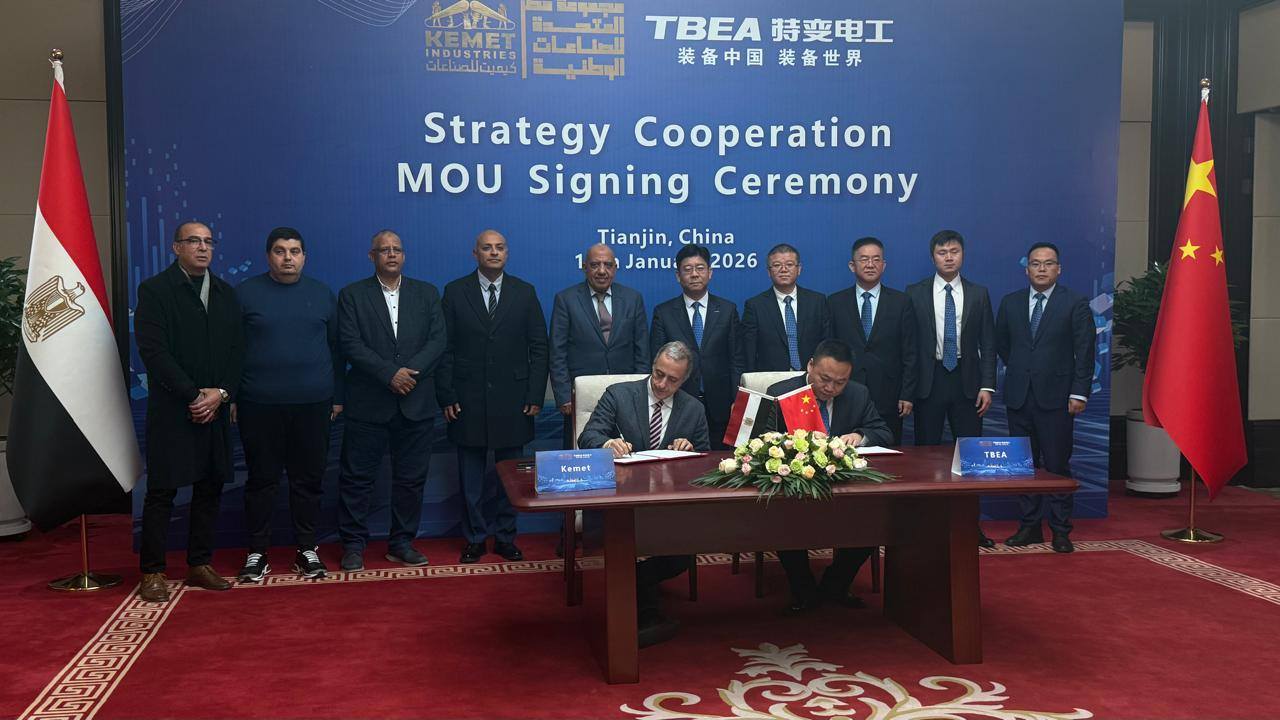
Egypt’s Kemet has signed two major cooperation agreements and one memorandum of understanding (MoU) in the field of renewable energy and energy storage with leading Chinese companies, according to statements by the Cabinet. The signings were witnessed by Mahmoud Esmat, Minister of Electricity and Renewable Energy, as part of his visit to China.
Kemet Chairman Ahmed El Abd signed the MoU with Zhang Xin, Chairman of TBEA, a global leader in power engineering and electrical equipment manufacturing, to cooperate on renewable energy systems, localize the electrical power grid connection systems, and establish the first factory to produce inverters in Egypt.
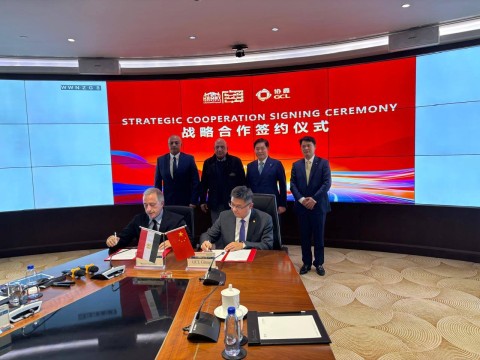
In addition, El Abd signed a cooperation agreement with the Chinese group GCL to develop an integrated industrial complex for localizing the manufacturing of solar photovoltaic cells and modules. Spanning 280,000 square meters (m²), the complex will be established with a production capacity of 5 gigawatts (GW) at a total cost of $500 million
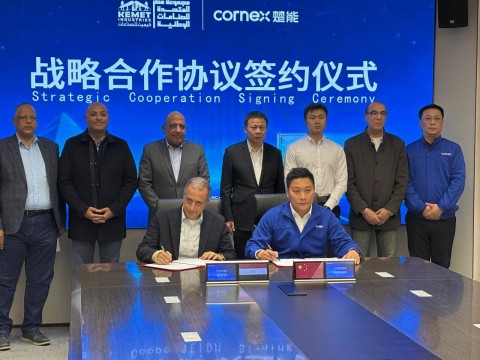
El Abd also signed another cooperation agreement with Dai Deming, Chairman of Cornex, a Chinese energy storage batteries manufacturer, to establish a $200 million energy storage batteries factory in Egypt. Relying on local industrial inputs, the factory has an annual production capacity of 5 gigawatt-hours (GWh).
During his visit, Esmat toured the partner factories in China, inspecting production lines, research laboratories, and testing centers. He discussed design, operational, and technical aspects to ensure that the Egyptian facilities replicate the advanced technologies and efficiencies of the Chinese references.
Esmat emphasized that Egypt aims to raise local content levels in renewable energy projects to up to 60%, while positioning the country as a regional hub for energy equipment manufacturing and power infrastructure development.
These agreements come as part of a broader surge in Egypt-China energy cooperation. Last week, China’s Sungrow agreed to establish a 10-gigawatt-hour (GWh) battery energy storage system (BESS) manufacturing plant within the Suez Canal Economic Zone (SCZONE).
Spanning 50,000 m², the Sungrow facility will be the first in the Middle East and Africa to produce BESS, with production slated to commence in April 2027.
