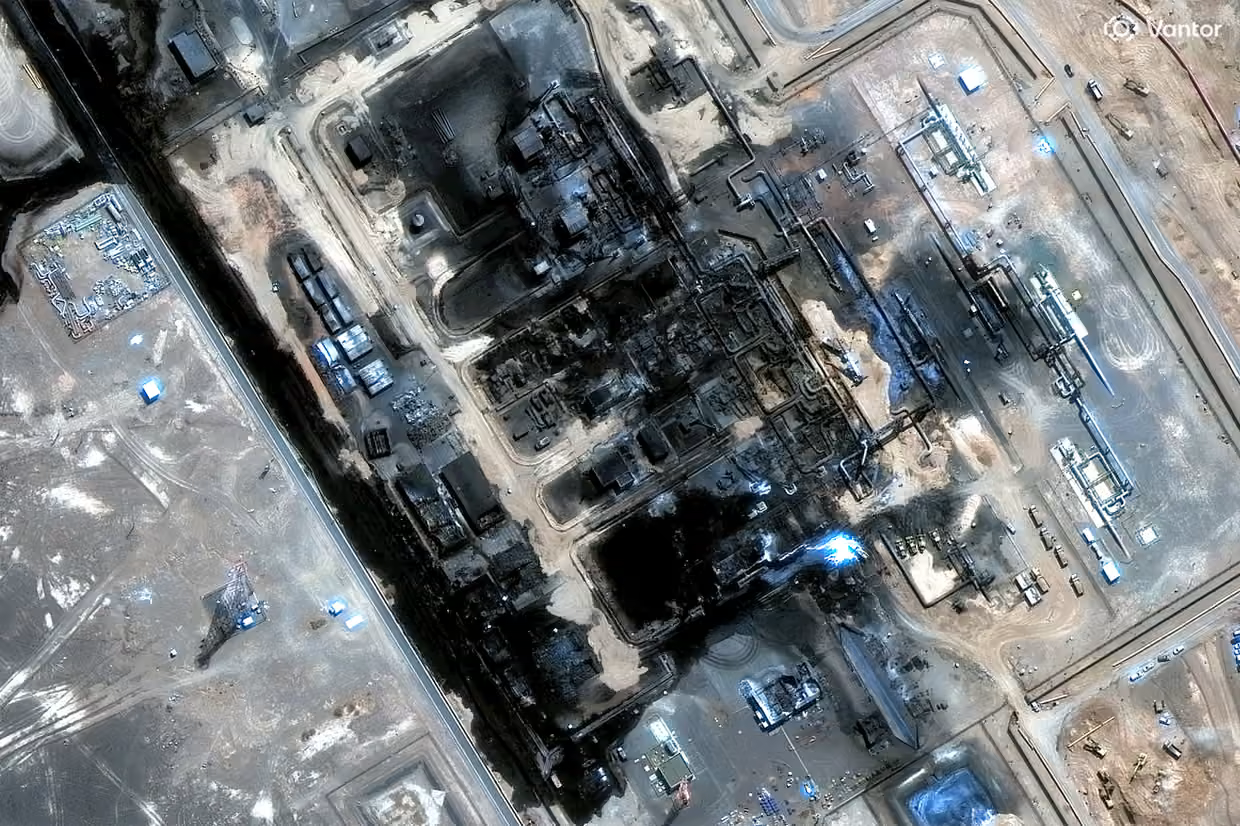
The global oil market faces fresh uncertainty after the temporary shutdown of Saudi Arabia’s East‑West pipeline (Petroline) on September 10, following a series of drone strikes. The disruption has raised concerns about the kingdom’s crude exports and the outlook for international oil prices.
Petroline’s role has grown since the outbreak of the US‑Iran conflict, with Riyadh diverting more than 70% of daily crude shipments to Yanbu via the pipeline to avoid Hormuz shipping risks. Stretching 1,200 kilometers (km) from eastern oil fields to the Red Sea port, the line has recently carried 4–5 million barrels per day (mmbbl/d) -equal to about 4-5% of global supply, according to Reuters.
“Suspending flows through the East‑West pipeline will inevitably affect world oil prices, particularly given the unresolved crisis in the Strait of Hormuz,” said Salah Hafez, former vice‑chairman of the Egyptian General Petroleum Corporation (EGPC).
Brent oil prices recorded $106.45 on September 14 compared to $100.90 on September 10, according to EGPC data.
“We are only on the third day of the shutdown, so the impact has not yet been significant. Saudi crude is still being pumped to Yanbu Port, shipped by tankers to the SUMED terminal at Ain Sokhna, and then transported to Sidi Kerir for export. As a result, the SUMED pipeline is likely operating at full capacity for now, with tankers continuing to deliver oil to the terminal,” said economic expert Mohamed El‑Bahwshy.
According to Reuters, Yanbu now has stocks to maintain exports for just five to seven days. Saudi Arabia also has stocks to supply customers for several days from Egypt’s ports of Ain Sukhna on the Red Sea and Sidi Kerir on the Mediterranean.
However, El-Bahwashy, who is also a Researcher at the Faculty of Politics and Economy at Suez University, mentioned that the duration of the shutdown could have far-reaching consequences on global oil prices. ” The longer the closure lasts, the higher prices will climb. We could see rates reaching $120 per barrel amidst this new crisis,” he said.
He noted that while markets have already priced in the situation at the Strait of Hormuz, the real concern now lies with Saudi Arabia’s main export route. This pipeline not only supplied the kingdom’s domestic needs but also carried surplus crude for export.
Pointing to another type of loss, he pointed out that if the crisis persists, there will be an impact on revenues generated through SUMED. “Since the SUMED pipeline is a joint Arab investment, the revenue loss would not affect Egypt alone and the impact would intensify the longer the shutdown lasts,” he added.
Established in 1974, the SUMED pipeline is designed to transport Gulf crude to Europe while bypassing the Suez Canal’s limitations. It is operated by the Arab Petroleum Pipelines Company, a joint venture between Egypt (50%) and Gulf countries including Saudi Arabia, Kuwait, the UAE, and Qatar.
In March, Saudi Aramco instructed several buyers of its Arab Light crude to load shipments from Yanbu port on the Red Sea coast instead of the Arabian Gulf terminals. The company operates the East-West pipeline, which has a capacity of up to 7 mmbbl/d. From this capacity, Saudi Arabia uses about 2 mnbbl/d for domestic refineries and exports the remainder.
Oil transported to Yanbu reaches global markets through two principal routes: Northbound to Europe and the Americas, where crude travels through the Red Sea to Egypt’s Ain Sokhna terminal, enters the Suez-Mediterranean (SUMED) pipeline, and is transported to Sidi Kerir on the Mediterranean coast for re-export. The other route is southbound to Asia, where tankers sail south through the Bab el-Mandeb Strait.
On September 11, Houthi forces seized control of three strategic Red Sea islands: Mayun, also known as Perim, the Hanish Islands, and Zuqar Island. Near the Bab al-Mandeb Strait, these islands sit at a critical shipping choke point. Combined with Iran’s blockade of the Strait of Hormuz, this move threatens to disrupt roughly a third of global seaborne trade.
These dual developments create a severe double constraint on Saudi Arabia’s oil export routes. First, the Petroline shutdown limits the volume of crude oil that can reach the western port of Yanbu. Second, even if the pipeline resumes full operations, Houthi control near Bab al-Mandeb jeopardizes the passage from Yanbu to Asian markets.
The pipeline emerged as a cornerstone of global oil logistics during the last few months. SUMED’s combined storage capacity across both the Ain Sokhna and Sidi Kerir terminals is 6 million cubic meters (mmcm) of crude oil and petroleum products.
Crude and condensate loadings at Egypt’s Sidi Kerir terminal averaged a record 2.17 mmbbl/d in the last week of August, about 50% above the first week of July. About 90% of those volumes were Saudi crude, according to Reuters.
Hafez believes Egypt could play a vital role in securing the global oil market by using its tremendous ground storage facilities to accommodate oil production from different oil-producing countries, rather than serving as a mere transit line for oil exports via the Suez Canal or the SUMED pipeline.
Saudi Aramco has been actively routing crude through Egypt’s SUMED pipeline and using associated storage facilities at Ain Sokhna and Sidi Kerir as part of a negotiated fallback strategy to bypass Red Sea risks. According to Reuters, Yanbu storage capacity stands at around 35 mmbbls, with Ain Sukhna and Sidi Kerir able to store 18 mmbbls and 20 mmbbls respectively.
“Egypt should pursue agreements with oil‑ and gas‑producing nations to allocate a substantial share of their output to its storage facilities. Such arrangements would help cushion the impact of disruptions like the temporary shutdown of the Saudi Petroline, safeguard the stability of global oil exports, and reinforce Egypt’s standing as a regional energy hub,” he said.
The post Saudi East-West Pipeline Attack Exposes Oil Supply Vulnerabilities first appeared on Egypt Oil & Gas.