





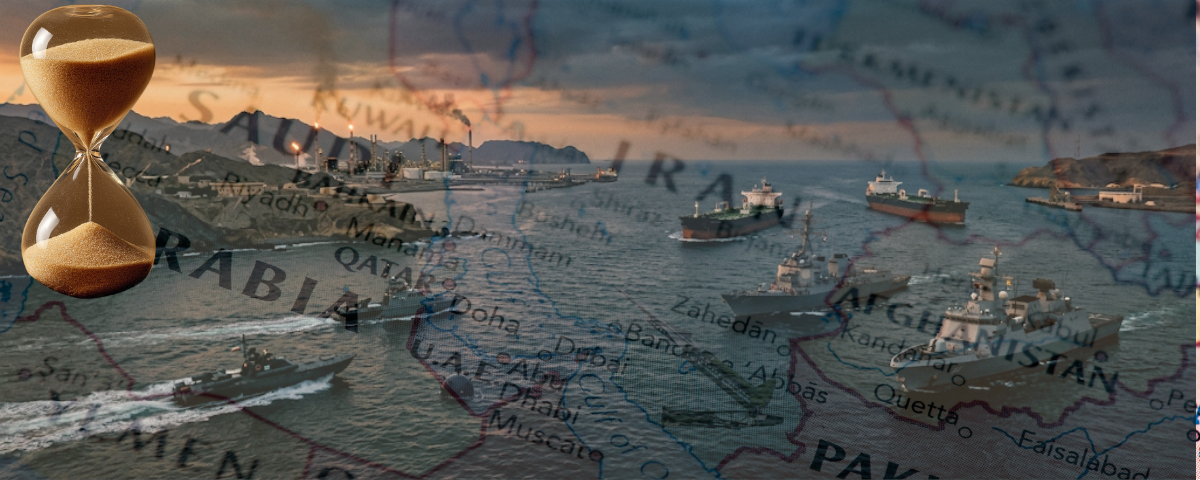

With only a few hours remaining before President Trump’s 8 p.m. EST deadline for Iran to reopen the Strait of Hormuz, an eerie silence has settled over the Middle East.
President Trump has vowed to target Iran’s energy infrastructure if they do not comply, likely with support from the Israeli Defence Force (IDF). While Israel hasn’t explicitly confirmed it will target Iranian power plants and critical infrastructure, it certainly hasn’t ruled it out.
Iran has promised to retaliate in kind by targeting similar sites across the region. This puts energy production in Gulf Arab states under constant threat. Since the conflict began, Iran has launched ballistic missiles, cruise missiles, and suicide drones toward the UAE, Bahrain, Kuwait, Qatar, and Jordan. Understandably, the prevailing anxieties push the oil prices up steeply.

While the frequency of these attacks has decreased following US and Israeli strikes on Iranian storage sites and launchers, the danger remains high.Regarding the Strait of Hormuz, tanker traffic has shown signs of improvement. However, Iran maintains that it will block any vessels linked to the United States or Israel from passing through the narrow waterway. This tension has caused insurance premiums for shipping companies to skyrocket, fueled by fears of sea mines. Fortunately, no ships have struck a mine so far.
Reading between the lines, it seems President Trump would prefer a diplomatic resolution over a massive military escalation. Hitting energy infrastructure would be devastating for Iranian civilians already facing extreme economic hardship. Furthermore, destroying such vital systems in a nation of 90 million people would create a rebuilding process that could take decades.

The United States is largely insulated from supply disruptions because it is self-sufficient in oil and gas. Its allies and the global market, however, are not. Without a deal, the entire global economy stands to suffer. As of 10:20 BST, WTI and Brent crude prices stood at $113.34 and $109.25 respectively. These figures are expected to climb sharply in the coming hours as military tensions reach a breaking point.
The world now watches the clock. If the deadline passes without a diplomatic breakthrough, we may see a fundamental shift in the global energy landscape. For now, the market is holding its breath, caught between the hope for a last-minute deal and the reality of a region on the brink of total escalation. The next few hours will determine whether the global economy faces a manageable hurdle or a historic shock.
