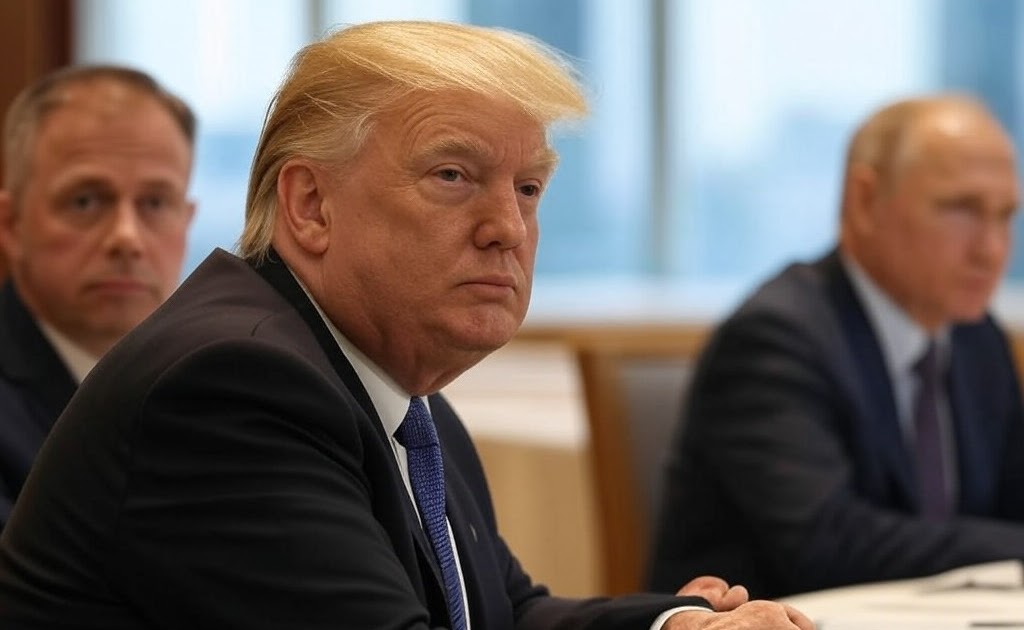
President Donald Trump held his first post-midterm press conference at the White House on Thursday, November 5, 2026, showing a relaxed demeanour, despite the Republican Party suffering heavy losses in the election.
Observers have noted a light-hearted shift in his presentation: while he previously displayed baseball caps on his desk emblazoned with 2028 to signal his future political ambitions, his table this time featured a cap simply reading Veto, a playful nod to how he plans to handle the incoming opposition-controlled legislature. Democrats won enough seats to seize control of both the House of Representatives and the Senate, a defeat that Vice President JD Vance and President Trump himself partially blamed on public frustration over the eight-month-old war with Iran and its impact on fuel prices.
During the conference, President Trump maintained his positions on global trade and security, stating that tariffs would stay and reasserting that Iran cannot be allowed to develop a nuclear weapon.

A sharp drop in global oil prices, by 13% to17%, has given the administration a respite from negative domestic inflation headlines. As of 18:00 GMT on Friday, the prices of WTI and Brent stood at $87.59 and $97.65 respectively.
On the diplomatic front, meanwhile, Qatar and Pakistan are continuing their efforts to mediate between the United States and Iran. Amid these quiet negotiations, the Secretary of Iran's Supreme National Security Council and former Islamic Revolutionary Guard Corps chief, Mohsen Rezaei, made an unannounced visit to Moscow on November 5 to meet Russian President Vladimir Putin.
Rezaei delivered a personal letter from Iran's Supreme Leader Mojtaba Khamenei, which reportedly included requests for advanced S-400 air defence systems to protect Iranian skies. Mr Rezaei publicly reiterated that Iran will not reopen the Strait of Hormuz or enter direct negotiations until the United States meets its seven specific conditions.
While relations between Washington and Moscow remain highly strained, the Kremlin has positioned itself as a potential mediator, even as it discusses energy cooperation and a gas pipeline project with Tehran.
As the threat of military confrontation still remains high, Iranian media has been advising citizens on how to survive potential air and missile strikes, reflecting deep domestic anxieties. President Trump has ruled out using nuclear weapons against Iran but has explicitly left the door open for a massive conventional military escalation, stating he may have no choice but to further destroy the country's assets if a deal is not reached.
Defense Secretary Pete Hegseth, whom President Trump confirmed he intends to keep in his post despite the election results, faces ongoing pressure as the administration navigates a three-month window before the newly elected Democratic Congress takes office in January 2027. Pete Hegseth wants the Congress to approve over $350 billion to bolster the US military machine.
In the strategic waters of the region, the situation remains highly volatile. The United Kingdom Maritime Trade Operations(UKMTO) recorded 11 vessel attacks over the week ending November 4, including projectile strikes that resulted in the deaths of at least two seafarers, one aboard the dhow Al Jusufi and another on the tanker Velos Sapphire.
The United States has also maintained a strict maritime blockade on Iranian ports, redirecting over 140 commercial vessels. On land, residents of Iran's Qeshm Island reported a series of powerful explosions following defensive US military strikes targeting radar detectors and a newly built Iranian air defence system.
In response, the Islamic Revolutionary Guard Corps claimed to have intercepted and destroyed an American MQ-1 drone over the island using their advanced anti-aircraft systems. Despite the ongoing military strikes and high risks of escalation, both Washington and Tehran appear to be giving Qatari-led diplomacy one final opening to avert an all-out war.